
Why human-centered science is gaining momentum – and old habits are slowing down the transition
On April 24th 2026 we invited Jarrod Bailey to our Proefdiervij Event: Order out of Chaos. His keynote presentation was full of hopeful insights and a clear view of how to transition towards a future without laboratory animals. Before his speech, we interviewed him about his beliefs and his vision on animal-free research.
Reading time: 7 minutes
His opinion is clear – if it was up to Jarrod Bailey, we would stop animal testing today. But how to get there? We asked Jarrod about his ideas, his work and what is needed to accelerate the animal-free transition. Dive deep into his wonderful humane universe and come out with lots of inspiration for what he believes is very much a real possibility: a future without animal testing.
“Instead of a fear of change, there is now a fear of missing out”
Who is Jarrod Bailey?
Jarrod Bailey is Director of Medical Research at the Physicians Committee for Responsible Medicine and is committed to advancing human-relevant, animal-free research methods worldwide. Together with his team, he works to accelerate this transition by driving change in science, policy, and funding. With over 20 years of experience and numerous publications, he demonstrates that research can not only be more animal-friendly, but also better for humans.
In the Netherlands, the Physicians Committee for Responsible Medicine might be somewhat less well-known, but in the USA, it is a major player. It tells a lot that the popular music artist Moby donated his entire fee from his performance at the Coachella music festival in 2026 to four animal welfare nonprofits, including PCRM.
Part 1. The transition is gaining momentum
“I’m very excited about the field as a whole. Since I left the lab nearly a quarter of a century ago – which makes me feel very old – an awful lot has happened. Not as much as I hoped, not as much as I think should have happened, but an awful lot of positive things have occurred.”
“What I see is that many researchers are starting to switch on to an animal-free future, a human-specific future. Policy change is supporting it. Funding is supporting it. Publishers are supporting it. It’s becoming mainstream rather than niche. There’s now, instead of a fear of change, a fear of missing out.”
“And all that is coming from a realisation that change just has to happen, and that it will be beneficial, that it will be good for animals. And that it will result in clinical benefit for patients; so it’s going to benefit people, and it’s not going to cost society billions of dollars to look after people with serious diseases. I think there’s a growing excitement about this. And it’s part of the Proefdiervrij Venture Challenge to see these real innovators who are making this possible, who are actually doing the change.”
“For a big part of my career I’ve been critiquing animal models and making the case: to educate the public, to educate scientists, to educate funders of research, to educate politicians who control funding and policy. All to say: we have to move away from animal experimentation. These old methods have been metaphorical brick walls that so much research has run into, time and time again because they’ve been so entrenched in science around the world. “This is how you do research”, people would say – you use animals. We all have lungs and hearts and eyes. Without looking at the differences that make animal use non-translational and misleading. It’s been very difficult to persuade those who can make the change to do so, but it’s becoming increasingly easy – because people are now starting to want this information.”
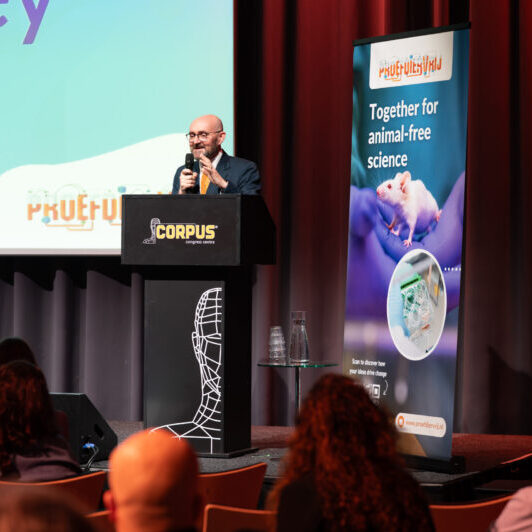
Jarrod Bailey
during the Proefdiervrij event 2026
Part 2. A personal tale of not working with animals
“I never worked with animals because I never wanted to. In fact, I turned down a very prestigious PhD offer when I was a student because they couldn’t guarantee that I wouldn’t be asked to use animals at some point in whatever project I was given. And I said, I can’t do that. So I’ve never used animals.”
“I think what pushed me into wanting to do something about animal use – rather than carrying on at the bench and doing research – was just seeing how many researchers were using animals. Also when there was absolutely no need to use them at all. They were generating data that weren’t relevant to humans, that were actually misleading and they were becoming really frustrated about this.”
“That is why, way back in 2003, I wrote to 30 different groups in my lunch hours in the lab, saying: this is what I do, this is my background in genetics, I’m a researcher. I want to help you move research away from animals – which is something you’re trying to achieve. Can I do something?”
“I was given my first project to do in my spare time and that’s how I got into this. That was 23 years ago and now I’m here. And the amazing thing is: the Physician’s Committee for Responsible Medicine where I’ve been working for almost three years now, was the organisation that originally gave me my first project in response to that first letter.”
Part 3. Why old habits are holding us back
“It’s difficult to define the biggest barrier in the animal-free transition because there are many, and they’ve been acknowledged and written about by scientists too. But I think if I was asked, which is the biggest, I would say: human nature and habit. People get into a way of doing things and the blinkers go on. And – not everyone, this is a generalisation – too many researchers just want to keep doing and keep receiving funding and keep publishing. Instead of being truly scientific and looking at the evidence in front of them and saying: “This doesn’t work, we need to change. This is better.” Thankfully, there are enough who see the need for change and who help change happen.”
“But I think that habit is just entrenched in science. And I think we need to be, to some degree, empathic, or at least try and understand why people are creatures of habit. Because if you’ve devoted your life’s work to something, it’s not nice to be told it’s been a waste of time. It’s not nice to be told that you’re wrong and your work means little or nothing.”
“We have to acknowledge that and we have to help researchers. That’s starting to happen, with training and education and funding. And with companies like in the Proefdiervrij Venture Challenge: startup companies providing the tools that are exciting for scientists and giving them what they need. So, everything is kind of coming to fruition now. And this is why I think we’re past the tipping point. This is now happening and that’s really thrilling.”
“There are still some scientists who are digging in their heels and demanding that we can’t stop using animals. But they are now the minority, a niche, the mavericks – not the ones looking for change. I think that’s key.”
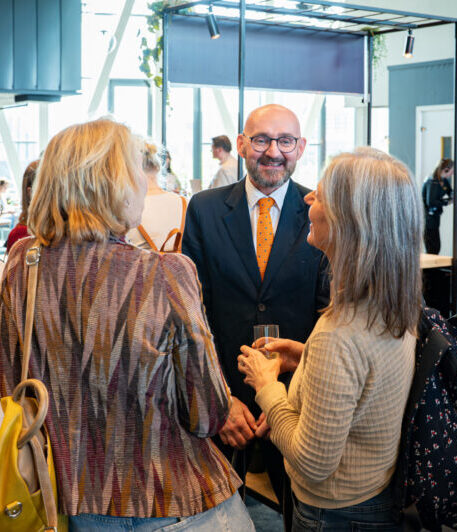
Jarrod Bailey
during the Proefdiervrij event 2026
Part 4. If you are true to science, you follow evidence
“We can talk about all sorts of diseases and conditions in which research has failed. The general statistic tells us that more than 9 out of every 10 drugs that look safe and effective in animals, go on to fail due to safety and efficacy for people* (source below). That’s damning. And you can’t get around that. You can’t dress that up as anything other than it is. It’s evidence of failure.”
“And we don’t just know that it’s happening. We know why it’s happening: we know the genetics and molecular biology behind it. So that’s all the more reason to leave it behind. And not only do we know that it’s happening and why it’s happening, we know what we can do instead. But why don’t we? I think that’s a realisation that a lot of the scientific community are having now. These are really exciting technologies. They’re taking us to places that we’ve never been before and people have to get on board with that.”
I’ll give you an analogy. It’s like if you lose your car keys and you look for them under the street light, because that’s where you can see. But you know you didn’t drop your car keys there. You’re looking there because that’s where the light is. That’s what people are doing. And they need to go and get a torch to look where they dropped their keys, because that’s where they are.
“When it comes to science, science is based on evidence, gathering all the available evidence and finding the reality from it. Whether you like the reality or not. We’re being truly scientific and pulling all of the evidence together and asking: “What is the best approach to take?” And finding that – not surprisingly – those approaches are human-specific. It’s not the methods based on dogs and monkeys and rats that we need. So that’s being truly scientific.”
“But because we’ve always used animals, so much science is founded on animal use. It’s become mainstream. And because of that, there’s a bias towards it. If someone presents some data to you that doesn’t use animals, you ask them to provide you with some animal data. And that bias means that, all too often, you will only be funded or published if your research involves animals. It’s crazy, because we know that the overwhelming evidence shows that animal use is unnecessary and that the animal data tends not to be human-relevant. So there’s that bias that’s making it difficult for researchers who are using human-specific methods to get funding for it and to publish the amazing human-specific data that they’re generating.”
“Too many scientists are saying: put an animal model in there, or can you test this in some animals and compare it to the human data? So fighting back against that, and to be able to not use animals and publish really good science that doesn’t involve animals, is a really, really important thing to do. What’s really pleasing about this fight is that it’s an international effort. So if animal methods bias is global, and it really does seem to be, then the fight against it has to be global. Lots and lots of people are getting on board with it and helping.” **
Sources:
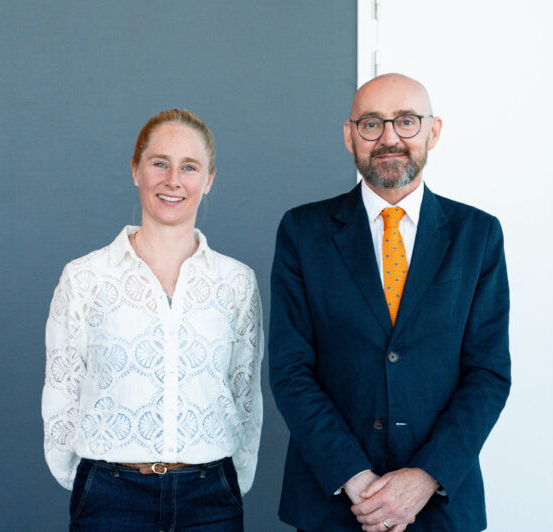
Debby & Jarrod
during the Proefdiervrij event 2026
Part 5. What needs to happen next – and how to get there
“I think more and more researchers are curious about NAM’s (new approach methodologies), human methods, even if they’re not already using them. If they reach out, there are more people than ever that want to help. There’s no excuse now for anyone to not use them in place of animals.”
“I’m often asked: “When do you think we could stop using animals for research?” There’s a whole spectrum of views, from ‘never at all’ to ‘we could do it tomorrow’. I think we could do it tomorrow, and I’ve thought that for some time. I don’t think we have everything we need in research, but we could get there very quickly. But I do think we’d be in a much better place if we stopped using all animals immediately because they’re so misleading.”
“The reality is that it’s not going to happen tomorrow, so how is this going to happen? It’s going to be a phased approach. It’s going to be a phase out of animal use and a phasing of the human specific methods. While I want to see this happen much more quickly, I think we have to welcome any initiatives to put a phase change plan into action.”
“And we’re often criticised for that, if we support a phase out of animals: “Why aren’t you demanding that it ends tomorrow?” The simple fact is: because it isn’t going to end tomorrow. So we have to accept this is going to take some time. We can’t let the perfect be the enemy of the good. Our job is to make sure that it happens and that it happens as quickly as it is practically possible, as quickly as people are comfortable with.”
“What I see as a big problem currently is that regulations about the use of animals in research aren’t always enforced. Animal research is effectively just waved through and approved by those whose job it should be to enforce rigorous regulations. If you look at ethics committee approvals, they might ask a few minor questions here and there. What they don’t do is sit the researchers down and say: “How did you look for alternatives? What were they? Why did you rule them out? How do you know the animal research that you propose is going to generate data that is really going to work and change the lives of people?” They’re the tough questions that everybody who wants to do animal research needs to be asked, and very often they’re not. All researchers have to do is say, ‘I looked for alternatives, but there aren’t any – so give me the funding’. I think the funding, the approval, the publishing of animal research is all too easy. The way forward is an enforcement of existing policies, maybe some new ones too, but also just access to expertise and to help. But the will has to be there to police this, to ask the questions. And unfortunately at the minute, it isn’t. So I would like to change that: the approval and the funding process is just too easy. Thankfully, the National Cancer Institute in the US is showing the way, having recently announced that researchers must seriously consider human-based methods, and that applications to use animals will be subjected to rigorous review.”
About Proefdiervrij
How we treat animals says something about who we are as a society. Especially when those animals are used in research intended to make people better. Proefdiervrij is working towards a world without animal testing by making human-centered, animal-free science visible and accelerating it.
That change is already underway. Increasingly, animal testing is being replaced by human-centered models that better show what happens inside the human body. Yet, animal testing often remains the standard. With 2030 as the target, we are working towards a tipping point where animal-free methods are the norm. In this way, we help let go of what no longer fits and build research that helps people, without using animals unnecessarily.
It is time for humanity. The future is animal-free!