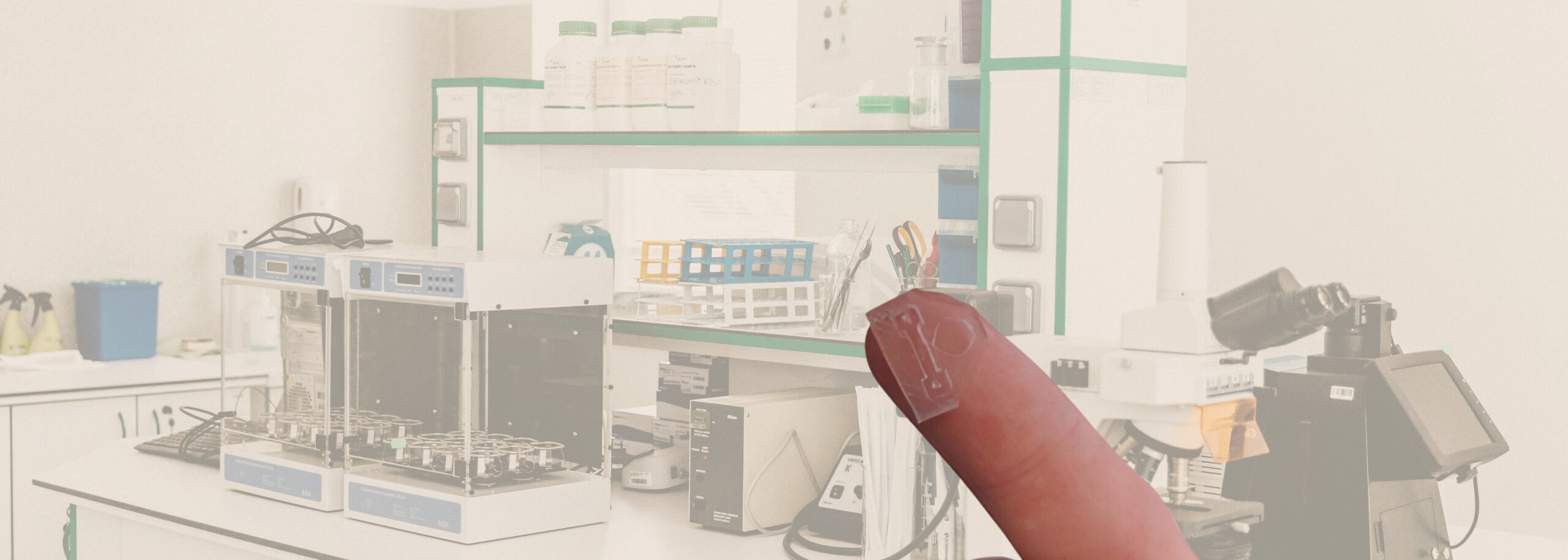

There are increasingly more ways to conduct research without using laboratory animals. But why haven’t these methods automatically become the norm yet? Debby will be discussing this in the round-table discussion in the House of Representatives on September 30.
Click through directly:
Understanding humans better
It is becoming increasingly evident that animal-free research has gained significant momentum over the past decade. Enthusiastic researchers are developing promising methods to gain a deeper understanding of complex human health issues. This is reflected in the many excellent entries for our innovative competitions, such as the Animal-Free Venture Challenge and the Hugo van Poelgeest Prize. Through guest lectures at (biomedical) educational institutions, we observe a new generation of researchers who are deeply intrinsically motivated to conduct animal-free research. Established scientists, too, are being challenged to consider the positive outcomes of new methods, such as organoids and organs-on-chips.
Now, these models must be put to use
However, science does not stop at the development of these promising animal-free models. The priority now is to ensure these models are adopted on a large scale. It is time for the system we have created for scientific research to make room for animal-free models to become the norm.
The ball is in the House of Representatives’ court
That is why we are engaging with Members of Parliament to impress upon them the necessity of this shift. On Wednesday, 30 September, Debby Weijers will join a discussion on animal-free science. In doing so, we give a voice to the laboratory animals that cannot sit at the table themselves. The round-table discussion to which we have been invited falls under the theme of ‘societal implications’—recognizing that the use of laboratory animals has significant societal consequences, affecting not only animal welfare but also the reliability of scientific research.
In her position paper, Director Debby Weijers states:
“As Director of Proefdiervrij, I am convinced that the future is animal-free. That we will no longer use animals for research and education, because animal-free innovations offer us greater opportunities than animal testing ever has.”
The key message we want to convey to Members of Parliament is: how do we ensure that animal-free models are actually put to use? Animal testing is still too often the default starting point. That needs to change.
About Proefdiervrij
How we treat animals says something about who we are as a society. Especially when those animals are used in research intended to make people better. Proefdiervrij is working towards a world without animal testing by making human-centered, animal-free science visible and accelerating it.
That change is already underway. Increasingly, animal testing is being replaced by human-centered models that better show what happens inside the human body. Yet, animal testing often remains the standard. With 2030 as the target, we are working towards a tipping point where animal-free methods are the norm. In this way, we help let go of what no longer fits and build research that helps people, without using animals unnecessarily.
It is time for humanity. The future is animal-free!
Discover more