Proefdiervrij Venture Challenge

Proefdiervrij Venture Challenge

In the first half of 2027 Proefdiervrij will organize the seventh edition of the Proefdiervrij Venture Challenge. During this challenge, researchers will be guided in setting up a venture plan, in which a scientific breakthrough within the life sciences is converted into a solid business case.

From the lab to the industry

In 2021 Proefdiervrij set up the first Proefdiervrij Venture Challenge. We want to accelerate and increase the impact of animal-free research on the use of laboratory animals. One way to achieve this, is by strengthening the position of animal-free models by setting up a commercial organization. Unfortunately, due to lack of experience and knowledge on the part of scientists this isn’t done as often as we would like. In order to tackle this, mentoring by experts is invaluable.

The Proefdiervrij Venture Challenge offers this mentorship.

The program

During a 3 months-long program teams are guided through setting up a venture plan, which takes an animal free scientific breakthrough in the life sciences and transforms it into a solid business case. Participants will learn various skills needed to build or expand a company. During the program, the teams will work on their ‘pitch’ and will be introduced to Life Science experts, investors and experienced entrepreneurs. The teams will be mentored by the team of the GameChanger Challenge BV, who have over 10 years of experience in guiding start-ups to success.

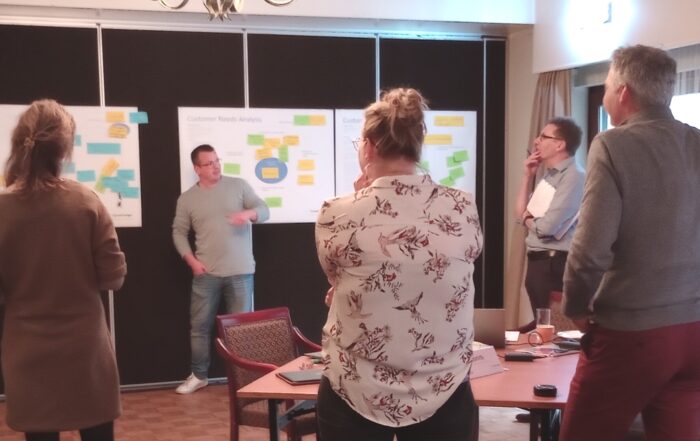
The program consists of two 3-day bootcamps, weekly coaching sessions and to close it off a final pitch with a festive award ceremony. The bootcamps combines plenary sessions with groups assignments and presentations from guest speakers with real-life experience. During the final, the teams will present their start-up plans to a jury made up of experts from the science and business world and a panel of potential investors.

venture challenge

Overview of the Proefdiervrij Venture Challenge

Wall of Fame

Excited to see who won the Proefdiervrij Venture Challenge in previous years? Check out our Wall of Fame and learn from the best!

Pre-registration 2027

Registration for the Proefdiervrij Venture Challenge 2027 is not yet open. More information regarding the procedure and deadlines will follow shortly. However, you can already submit your details for the interest list: we will then automatically notify you when registration opens, ensuring you don’t miss anything. Send an email via the button below and/or take a look at what the registration form will look like (this one was for 2026, so not for filling out now; for informational purposes only).

More information

The Proefdiervrij Venture Challenge originates from the regular Venture Challenge for starting entrepreneurs, be it with an adjusted scope. Innovations that qualify for the Proefdiervrij Venture Challenge must meet the following conditions:

  • It’s a 100% animal-free innovation that doesn’t use animals that don’t fall under the EU Directive 2010/63/EU either. This means no shrimps, fruit flies, etc. and also no slaughterhouse material.*
  • It’s an idea in the following sectors, among others: medical, food, cosmetics, pharmaceuticals, chemistry – this list is not exhaustive.
  • The innovation can generate a demonstrable, positive impact on the use of laboratory animals. The question “what positive impact can this innovation have on the use of laboratory
  • When in vitro methods are involved, an FCS-free medium is preferred.

* Use of already existing laboratory animal data is only possible in consultation and in combination with human data (new or existing).

A maximum of 6 teams can participate in the Proefdiervrij Venture Challenge. A selection committee will select 6 teams from the incoming applications.

Participation in the Proefdiervrij Venture Challenge is possible for teams that meet the following conditions:


1. 1. The team consists of a minimum of 3 and a maximum of 5 people.

2. The team wants to market a new product, process or service based on a new technical invention or a new application of pre-existing technology, arising from scientific research. This must fall within the aforementioned scope.

4. When the idea includes setting up a company, this must be focused on countries within the EU that have a clear connection with the Netherlands (a Dutch founder for example)

5. If the application is made by a startup, the startup cannot be older than 5 years.

1. Customer needs
→ Understand who will use your innovation and what problem it solves for them. It’s about shifting from “what I’ve created” to “who needs it and why”.

2. Creating value
→ Learn how your idea delivers benefits – for patients, scientists or businesses – and how to clearly express that value.

3. Creating a long-term perspective
→ Think beyond your initial prototype: what is the vision for the next 5-10 years? Who will maintain, expand or take over your innovation?

4. Defining competitive advantage
→ Determine what makes your approach better or unique compared to others – technology, cost, speed or ethical impact.

5. Pitching to investors
→ Practise presenting your idea clearly and convincingly so that others can see its potential – not just the science, but also the story.

6. Financial models
→ Gain a basic understanding of how to estimate costs, prices and potential revenues – and turn your innovation into a sustainable business case.

In any case, you will have one hour of one-on-one coaching per week. In addition, there are the hours spent on your research and your venture plan. The number of hours per week depends very much on the team: Are you already well into the process? How clear is your vision? Were you able to make significant progress during the boot camps?

You will deliver three final products, namely:

1) a pitch for investors

2) a pitch for the general public

3) Venture plan for investors

2000 euros for a team of 3 persons + 500 euros extra per additional person (maximum team size of 5 persons).

If you are participating in the Venture Challenge, their are some crucial deadlines. More information about those will follow shortly. In 2026 we had these dates (for information purposes only):

5 January: Deadline for applications
9 January and 12 January: Interviews
4-6 February: Bootcamp I
18-20 March: Bootcamp II
10 April (all day): Final
24 April (all day): Award ceremony

The winner of the Proefdiervrij Venture Challenge 2026 is Daranamix. The Daranamix team, consisting of José Manuel Rivera Arbelaez, Jana Hecking, Mariel Cano Jorge and Robert Passier, developed the Multi-Heart Plate: a human-based model that mimics multiple fluid-pumping heart chambers using reprogrammed stem cells. Combined with real-time sensors, this model delivers clinically relevant data.

Daranamix will use the £25,000 prize money to further market their innovation.

Do you have questions regarding the sign up procedure or the Proefdiervrij Venture Challenge in general? Contact Anne Burgers for more information.

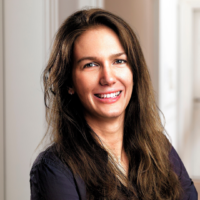
“With the help of the Proefdiervrij Venture Challenge, animal-free models can make the step from development to real application. In this way, they can contribute even better to a world without test animals.”

Anne Burgers, science & innovation advisor at Proefdiervrij
Anne

Updates

Newsletter for scientists

If you are involved in research, why not subscribe to our newsletter for news about animal-free approaches in science and innovation. You will then receive regular updates on events, new projects and proposals for grant funding.

Contact us

Kom bij ons langs

Visit

Groot Hertoginnelaan 201
2517 ES Den Haag

Groot Hertoginnelaan 201
2517 ES Den Haag

Phone number: +31 (0)70 306 2468