
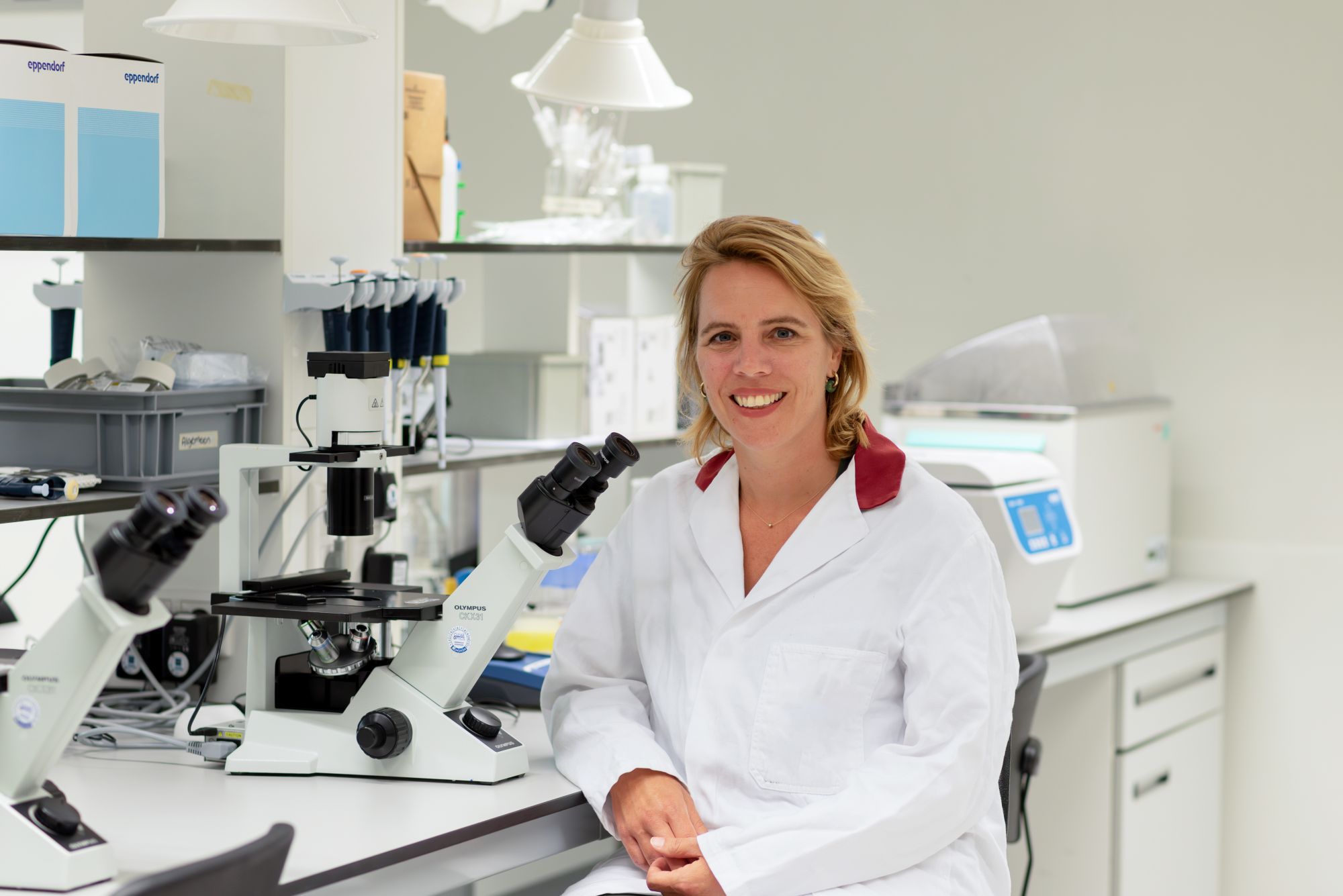
To mark the occasion of the new ‘Toxicology in Transition’ chair at Utrecht University, interviewer Simone Janssen spoke with Professor Anne Kienhuis.
“I spend the whole day just talking,” says Anne Kienhuis with a laugh when I ask what her work looks like in practice. Anne no longer works in a laboratory on a daily basis, as she did at the start of her career. Back then, she cultured rat and human liver cells and studied how they reacted to chemical substances. Her doctoral research already focused on alternatives to animal testing.
“But you’re mainly occupied with your own model, working on a tiny scale,” she explains. “The result ends up in a scientific publication, but I didn’t feel I had much influence on how the field developed further.” That was precisely what began to interest her more and more. Not just the question of what technical developments are possible, but—above all—what happens next with such a new technique?
Since January 2026, Anne has held the Chair of Toxicology in Transition at Utrecht University. The RIVM and Proefdiervrij provide financial support for the chair; the Arie Pais Fund helps make Proefdiervrij’s contribution possible. In addition, Anne works as a senior researcher at the RIVM. Her chair focuses precisely on that next step: how do you ensure that animal-free, human-centric methods are not only developed but also genuinely trusted, approved, and put into use?
A promising technique is not necessarily practical
Toxicology investigates the potential harmful effects of chemical substances and medicines on human health. Animal testing is still used in safety assessments, even though an increasing number of new methods—utilizing human cells, computer models, and artificial intelligence, for example—are becoming available. As long as animal testing remains the standard, animals will continue to be part of safety research.
Anne sees great potential in this area. “Animal testing can teach us a lot, but it always remains an approximation of what happens in the human body,” she says. “In some cases, new models based on human cells and data can actually align better with human biology.”
However, a promising new technique is not automatically suitable for practical use. Anne gives an example: a researcher might develop a promising “organ-on-a-chip” (a small chip containing human cells that mimics organ function) and publish an excellent scientific paper about it. “But such a technology does not automatically answer the specific questions that need to be addressed during a safety assessment.”
A method must yield reliable, reproducible results and answer the specific question for which it is being used. Furthermore, scientists, evaluators, and regulatory bodies must be able to trust it. “A scientific publication does not immediately make a technique suitable for practical application,” says Anne. “Sometimes, a technique even has to go back to the drawing board.”
It’s not just the technology that needs to change
You might think: develop better alternatives, and animal testing will disappear on its own. But in practice, the shift to animal-free toxicology turns out to be far more complex. Existing rules and guidelines are built around specific information needed to assess a substance’s safety. Sometimes, the question is framed in such a way that animal testing remains the standard method for obtaining that information.
“So, sometimes you have to re-examine the question itself,” Anne explains. “What information do we actually need to make a statement about safety? And can we gather that information in a different way? To make animal-free methods the true norm, changes are needed in many more areas than just the lab.”
This requires far more people than just laboratory toxicologists. Anne mentions risk assessors, data scientists, policymakers, regulatory bodies, social scientists, and psychologists. After all, beyond technology, factors such as trust, habits, interests, values, and practical concerns also play a role. “As toxicology scientists, we sometimes think we can solve everything with technology,” she says. “But we now realize it involves a systemic change.”
It is precisely this change that fascinates Anne. “I am particularly curious about change as it unfolds. Which mindsets are shifting? Where does resistance arise? And how do you bring different perspectives together?”
“As scientists in the field of toxicology, we sometimes think: we can solve everything technically. But by now, we know that it is a systemic change.”
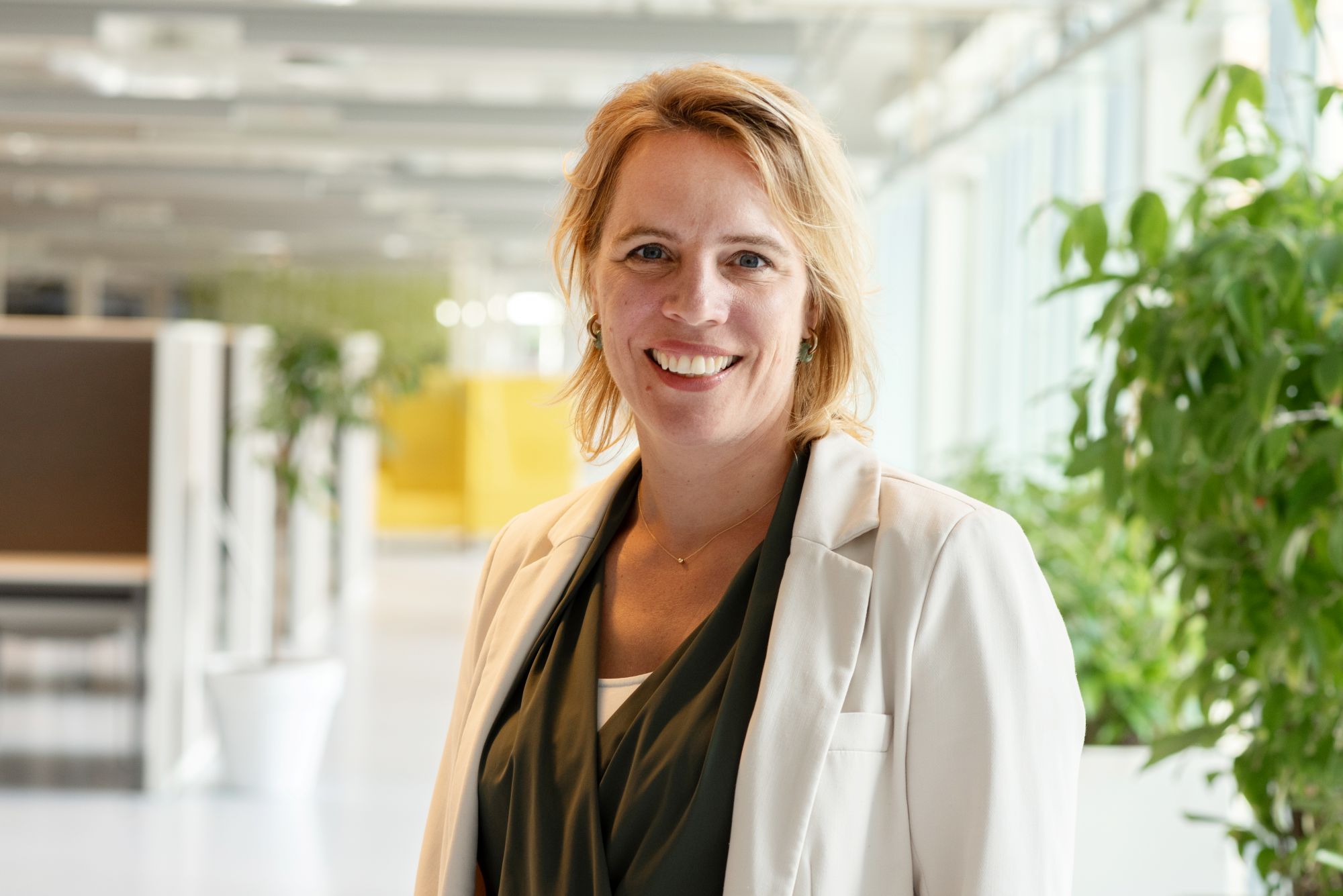
Anne Kienhuis – Professor of Toxicology (Utrecht University) and senior researcher (RIVM)
Playing chess on multiple boards
That ability to make connections turns out to be precisely her strength. Anne mentors researchers, serves on international working groups, contributes to discussions on guidelines and validation, and constantly keeps an eye on developments across various fields. “I’m essentially playing chess on a great many different boards,” she says with a chuckle.
She might hear something in one meeting that is of interest to another researcher. She spots where regulations and technology do not yet align and links questions arising from different worlds.
“I am definitely a team player,” she says. “I talk to various parties, identify where the connections lie, and try to bring people together.” For a long time, she viewed herself primarily as a sort of prompter: someone working in the background to forge connections and help others move forward. Her appointment as a professor is changing that; suddenly, she is the one in the spotlight. She laughs as she talks about it, though she admits it takes some getting used to.
At the same time, her technical background remains important. She no longer needs to develop every technique herself, but she does need to understand enough to connect specialists with one another. That is why she enjoys reviewing doctoral theses, for instance. “It’s a real perk that comes with this chair. It allows me to stay close to the latest technical developments.”
Science, policy, and society
The chair also brings together different worlds. Utrecht University provides the academic environment for research and education. Through her work at the RIVM, Anne is well-versed in the realms of risk assessment, policy, and regulation. Proefdiervrij explicitly adds the societal perspective to this mix.
This entails more than just financial support. Proefdiervrij also raises questions that might not be the first to arise from a purely scientific or policy-driven standpoint. For instance, when is an animal-free innovation truly animal-free? After all, animal-derived products can still be used in research involving human cells. Anne then incorporates such questions into her consultations.
In her view, this is precisely where the strength of the collaboration lies. A new method may be scientifically excellent, but for it to be truly adopted, assessors, policymakers, and regulatory bodies must be able to work with it, and societal concerns must be taken into account. “Science, policy, and society are truly interconnected.” For us, therefore, supporting the chair is not merely an investment in developing new methods. It is equally about that complex subsequent step: ensuring that animal-free science gains trust, wins acceptance, and is ultimately put into practice. Only then can a promising innovation contribute to replacing animal testing.
Changing the norm
Where does Anne hope to stand by the end of her professorship? She sighs briefly. Her goal is clear: by then, animal-free methods should be the norm in risk assessment—not just in science, but for all stakeholders, including at the policy level.
At the same time, she knows how complex the path to achieving this is. She likens the system to a dashboard full of dials. Right now, people sometimes turn a dial vigorously without setting much in motion, only to realize later that action is actually needed elsewhere first. In the coming years, she aims primarily to discover which dials truly matter.
“I think that by the end of the professorship, we will at least have identified the dials.” She laughs. “I don’t know yet if we’ll have actually turned them.”
Anne will deliver her inaugural lecture on December 9. In it, she will elaborate on how animal-free methods can not only be developed but also effectively put into practice.
About Proefdiervrij
How we treat animals reflects who we are as a society—especially when those animals are used in research aimed at improving human health. Proefdiervrij is working towards a world without animal testing by highlighting and accelerating human-centric, animal-free science.
That shift is already underway. Animal experiments are increasingly being replaced by human-centric models that provide a better picture of what happens inside the human body. Yet, animal testing often remains the standard. With 2030 as our target on the horizon, we are working towards a tipping point where animal-free methods become the norm. In doing so, we help move away from outdated practices and build a research landscape that benefits people without the unnecessary use of animals.
It is time for humanity. The future is animal-free!
Discover more