
Who will win the Hugo van Poelgeest Public Choice Award 2026?
Who will win the Hugo van Poelgeest Public Choice Award 2026?
Do you want to support young researchers working towards a future without animal testing? Together with the Stichting Bouwstenen voor Dierenwelzijn (Building Blocks for Animal Welfare Foundation), we present the Hugo van Poelgeest Prize every two years to a young researcher conducting innovative, animal-free research in the life sciences.
An expert jury selects the winner, but animal-free research isn’t just for scientists—it belongs to everyone. That is why we also award a public prize of €1,500. Who wins it? That’s up to you!
Elise, Job, and Jesse prove day in, day out that a world without animal testing is possible. Which researcher do you think is most future-proof? Vote for your favorite now, and they might just win the 2026 Hugo van Poelgeest Public Choice Award!
You can vote until Sunday, November 1st, 2026. The winner will be announced on Friday, November 13th, during our event “The Future is Human(e).” Keep an eye on our social media channels for the latest news! And please share this page so that even more people can cast their vote for animal-free science.
The Top 3 nominees
Earlier this year, research group leaders could nominate their early-career researchers for the Hugo van Poelgeest Prize. A scientific jury subsequently selected the following top three from all the nominees: Elise Heesbeen, Jesse Weidema, and Job Berkhout.

Jesse Weidema
Jesse Weidema investigates the ethical and philosophical aspects of animal-free methods, such as organ-on-a-chip and organoids. In doing so, he focuses particularly on how these methods can genuinely replace animal testing. His work demonstrates that the transition to human-centric models is not solely about new technology; it also concerns how we understand, design, evaluate, and compare animal testing and animal-free methods.

Job Berkhout
Job Berkhout is working on an animal-free method to predict which substances could be harmful to the early development of the unborn child. In his research, Job combines artificial intelligence with a dynamic computer model based on experimental biological data. In doing so, he is laying the foundation for a ‘virtual embryo’: a promising approach that can help better protect humans and the environment, without the use of animal testing.
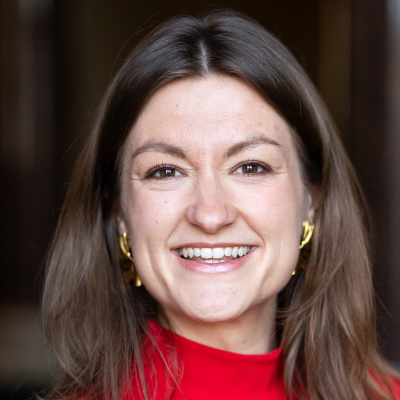
Elise Heesbeen
Elise Heesbeen investigates how the immune system can influence the development of anxiety disorders. In her research, she employs three animal-free methods, gaining new insights into the development, potential prevention, and treatment of anxiety disorders. Her work demonstrates that there are various ways to conduct complex research without the unnecessary use of laboratory animals, while improving our knowledge of mental health.
Register for the Award Ceremony
Do you work in the field of animal-free research and do you want to join our festive event around the Hugo van Poelgeest Prize? Feel welcome to register for the event on the afternoon of Friday 13th in Leiden.
What is the Hugo van Poelgeest Prize?
The Hugo van Poelgeest Prize is the oldest Dutch award for animal-free scientific research. Mrs. Van Poelgeest-Spatkova established it to honor her late husband, Hugo van Poelgeest, who dedicated his life to animal welfare.
Why is this an important prize?
In the past, the prize was awarded every four years by the Bouwstenen voor Dierenwelzijn (Building Blocks for Animal Welfare) foundation. Since 2019, we have been involved in organizing it, and the prize is now awarded every two years. We currently focus on the new generation of scientists, aiming to inspire them to continue working with animal-free models.